Editorial
DOI:
https://doi.org/10.65828/ayw2fn79Full Text
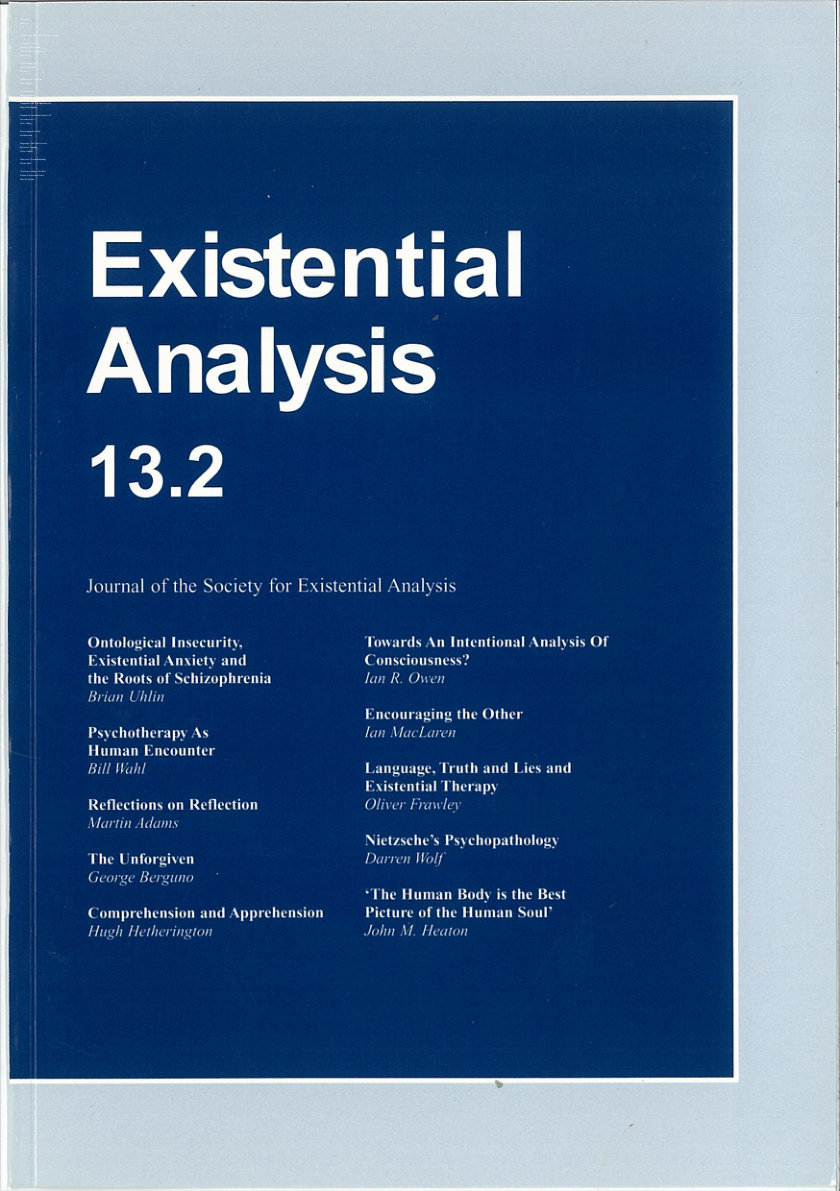
An important theme of this issue of the Journal is questioning the mode of encounter between therapist and client and how we can talk about it. Two of the papers (Wahl and MacLaren) emphasise the importance of the therapist's humanness. Technical rules, interdictions, and proprieties must not stand in its way. Encouragement and genuineness are crucial ingredients of therapy; but many therapists hide these ways of being under the veil of professionalism. Psychotherapy and counselling involve talking. How can we best express our reflections on our experience of it? This issue of the representation of experience is a theme of Adams. Psychotherapy is full of jargon and simple formulae. Bergano, by considering stories by Poe and Pushkin, shows that revenge and so by implication other states of mind, cannot be reduced to simple psychological formulae. The relation between language and truth is discussed by Frawley. Schizophrenics are often seen by people as being radically different from 'us'. Uhlin uses Laing's phenomenology of schizophrenia to show that the schizophrenic is attempting to avoid his non-being like most people, but due to his lack of self-affirmation in childhood he is unable to do this satisfactorily.
Simon du Plock
References