Editorial
Full Text
It is customary, as we enter each new year, to take stock of our lives and wonder with an increased intensity about how we contributed to the past, our own past and our collective past, and to reflect upon what the next twelve months will bring. Or, to make it more active than passive, what we can bring to the new year to make it different from the last.
The world currently reels under a multiplicity of blows inflicted upon it by the actions of humankind. Whether we consider the plight of Ukraine in the war caused by Russia's invasion, the escalating impact of the climate emergency, the increasingly obvious fragility of democratic forms of government or multiple challenges of inequality and prejudice, crisis is everywhere. For each crisis, though, we see a reaction. The overall impression is of an increasing level of dissatisfaction with the way things are. This can only be a good thing, although sometimes it is hard to tell; those with power rarely give it up willingly.
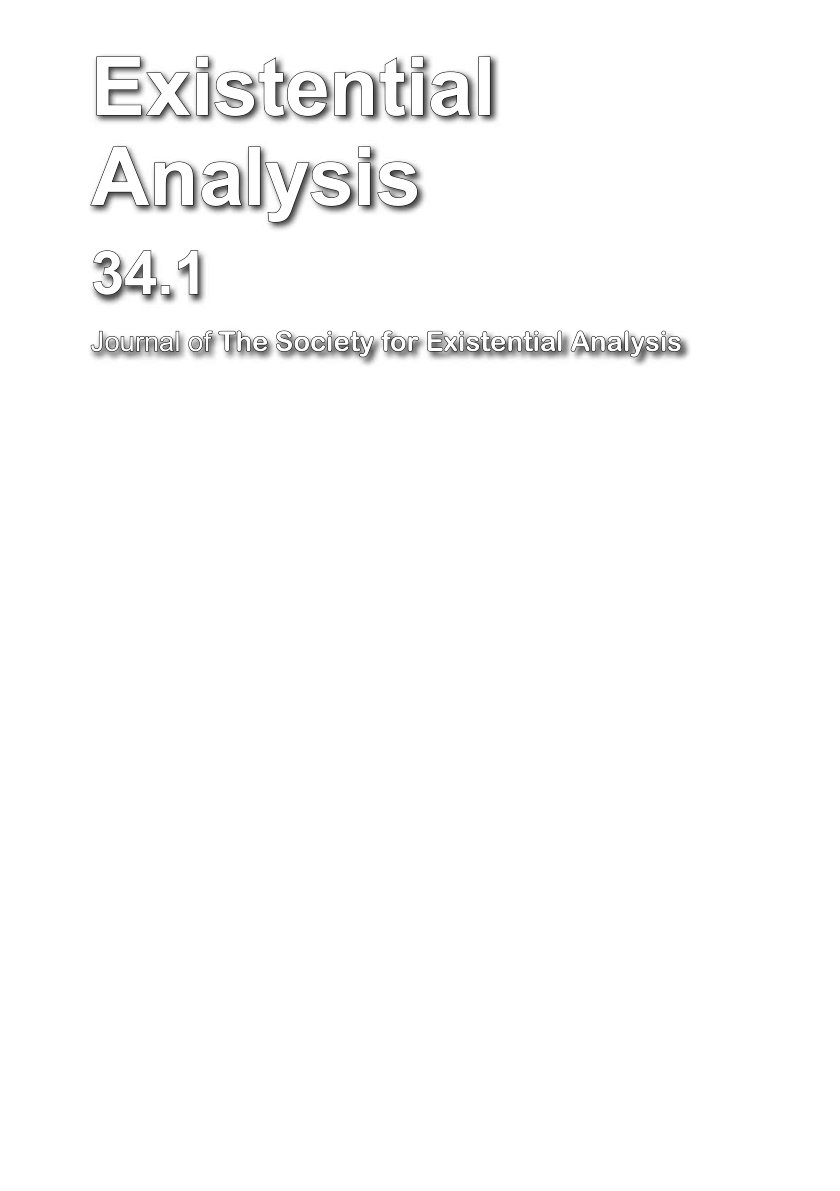
Protest, it seems, is becoming more widespread. Not only that, but because the human spirit (a.k.a. human freedom) is uncontainable and therefore endlessly creative, new ways of protesting and making a stand are always being devised. Throwing bricks is just a way of protesting and may on occasions be justified in the defence of freedom. The Iranian football team's refusal to sing 'their' national anthem at the World Cup is another. The England team's compromise with respect to the rainbow armband is, perhaps, yet another. It remains to be seen how effective these and other strategies will be. Among the novel forms of protest to emerged in 2022 was the act of holding up a white sheet of paper in public. This brave gesture has inspired us to retain the plain white cover for this journal during 2023. The refusal to speak, if enacted at the right time, can be a very effective and vocal way of saying something. At least, some governments seem to think so by the way they have reacted.
Whatever we think about the positions they took, the major existential philosophers all had something to say about the status quo. The perennial existential issue is about how different freedoms find a way to co-exist, for co-exist we must. If we do not there will a cost. Whatever is done, the only time it matters is when people are prepared to sacrifice their liberty or even their lives in defence of their beliefs. Otherwise it is tokenism or posturing. The paradox is that only gain if we are prepared to risk a loss.
It is prescient, then, that the 2022 SEA annual conference took protest as its theme. We are pleased to include five papers from it in this issue. The first, by Chris Goto-Jones, uses Buddhist philosophy and psychology to understand the suffering of those who have been unjustly shamed by the dissemination of disinformation. Manu Bazzano's paper looks at some of the ways that patriarchy has influenced notions of masculinity and what it currently means to be a man. Drawing on her research and her clinical work in the area of marriage, affairs and consensual non-monogamy, Susanna Petitpierre redefines generosity relationally in terms of opening towards an ambiguous stirring evoked within oneself in encounters with others. And Paulius Skruibis, writing autobiographically, warns that a pacifist stance against the war in Ukraine may itself lead to even worse atrocities.
But first, we begin with two winning papers from the SEA/Existential Analysis Writing Award on Kierkegaardian Contributions to Existential Therapy. This exciting initiative was launched early in 2022 by Devang Vaidya, who guest-edits this section of this issue. The initiative sought to encourage the use of the work of Kierkegaard – a philosopher who found both personal and far-reaching ways of making a stand – in therapeutic practice. The first paper is by Cassandra Swick who writes about the parallels between Kierkegaard's model of despair and its resolution in faith, particularly with clients whose romantic heartbreak, and how the existential analyst can work with clients who are avoiding awareness of ultimate concerns. The second paper, by Myriam Moreira Protasio and Ana Maria Lopez Calvo de Feijoo, suggests that the natural scientific narrative of psychology conceals an unexplored Kierkegaardian thread that, if adopted, could reorientate psychology existentially. Although not entered into the competition, Devang contributes his own Kierkegaard themed paper to conclude this section, describing an approach to therapy that fully embraces the capacious irony of Kierkegaard's conception of personhood.
The next paper, by Andrew Carnahan, examines the issues around working clinically with clients who have had challenging rather than beneficial psychedelic experiences. Having to work online through the pandemic has challenged many people and Stella Duffy, again with the aid of a clinical example, argues that Gendlin's ideas about Focusing can overcome the constraints of working online. Staying with clinical applications, Paulo Evangelista reviews dream analysis in Daseinsanalytic therapy, which she then illustrates. And staying with Daseinsanalysis, Miles Groth continues his comprehensive review, begun in Existential Analysis 33.2, with an overview of Medard Boss's development as a therapist, and the implications of this for therapeutic practice. Andreas Ioannou then examines the way trauma reveals itself in everyday life, and goes on to examine implications for both practice and the therapist's own life. Lastly, Simon Wharne considers some of the educational issues that need to be considered when studying counselling and psychotherapy. These include assessment and evaluation strategies and also issues of diversity, inclusion, and exclusion.
As usual, this edition concludes with a number of book reviews, some of which overlap and enhance the papers. We are grateful, as ever, to Ondine Smulders for collecting, compiling and introducing this section of the Journal, and we would urge readers who are interested in any of the publications we have received to contact her for more information on what is involved in writing their own review.
Prof Simon du Plock
Dr Martin Adams
Devang Vaidya
References